

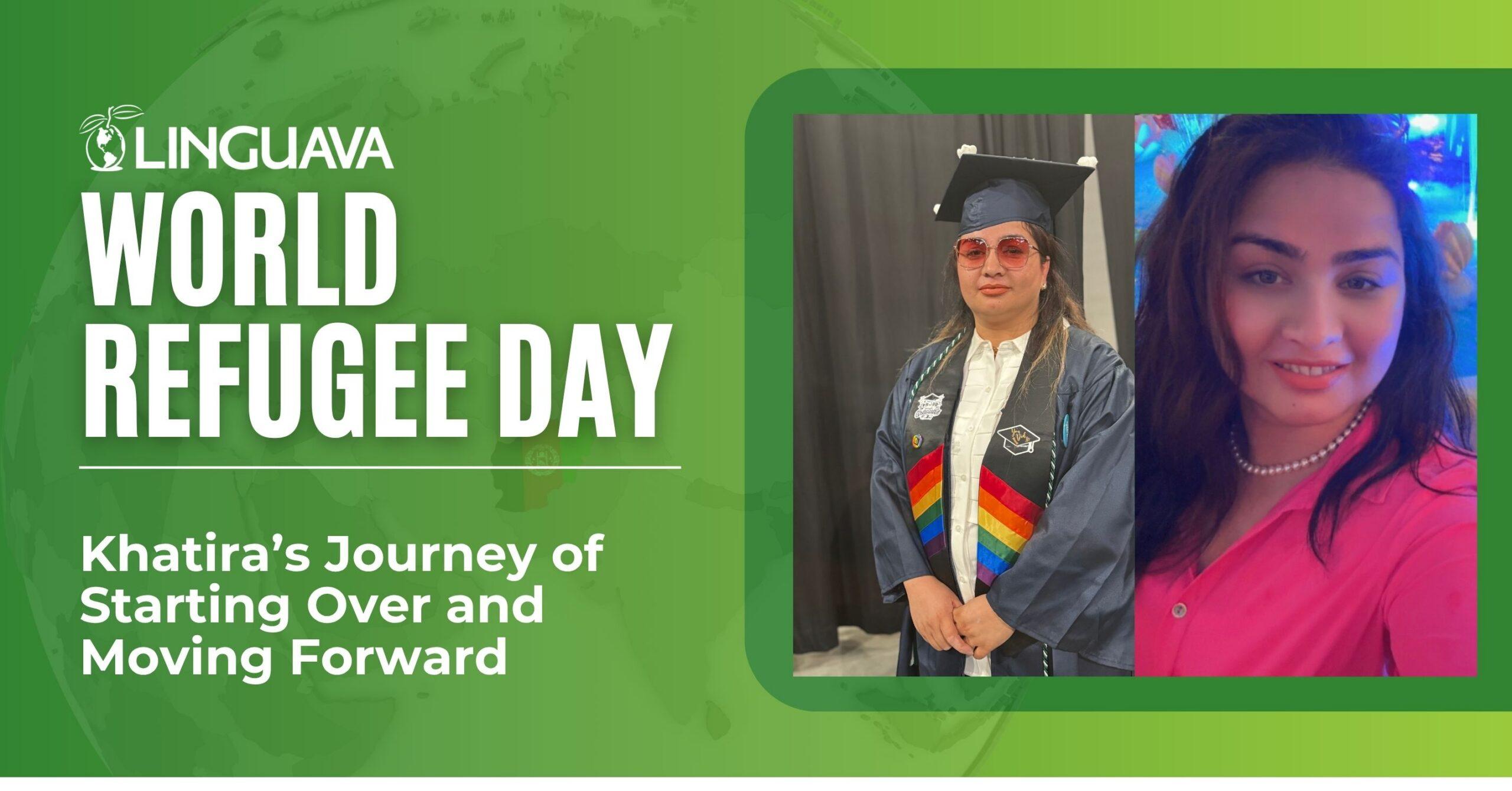
For World Refugee Day, celebrated each year on June 20th, we are honored to share this reflection from one of Linguava’s contract interpreters. She writes from her own experience as a refugee and as someone who now helps others navigate language barriers in critical moments. We are sharing her words as written, with gratitude for her willingness to tell part of her story.
Khatira’s Journey of Starting Over and Moving Forward
My name is Khatira Afzal, and my immigration journey began in 2021. After leaving Afghanistan, I spent ten months in a refugee camp in Abu Dhabi before eventually resettling in Portland, Oregon, which was like a hell for me. In many ways, this was not the first time I had experienced displacement. When I was two or three years old, my family moved from Afghanistan to Pakistan. I attended school there through seventh grade before returning to Afghanistan. Back in my home country, I completed my education and earned a degree in Civil Engineering. Before coming to the United States, I had built a successful life and career in Afghanistan. I worked as a university lecturer, teaching at two universities at the same time, and I also served as a Director of Teachers at a university. Education was always my passion. In addition to my academic career, I was an entrepreneur. I founded my own private school, Engineer Khatira Afzal Private High School, to provide educational opportunities for students. I also established a women’s fitness gym where women could exercise in a safe and supportive environment. I was proud of the work I had done and the opportunities I had created for others in my community.
”Leaving your country is not just about moving to another place. It means leaving behind memories, relationships, accomplishments, and a part of your identity.
Then, in 2021, everything changed. I had to leave behind my home, my career, my businesses, my relatives, my friends, and the life I had spent years building. Leaving your country is not just about moving to another place. It means leaving behind memories, relationships, accomplishments, and a part of your identity. It was one of the most difficult experiences of my life. When I arrived in the United States, I quickly realized that rebuilding a life from scratch would be one of my greatest challenges. Everything was new—new people, a new culture, a new language, and a completely different system. My first job was working in a storage facility. While I was grateful for the opportunity, it was emotionally difficult. I had been a civil engineer, university lecturer, school founder, and business owner. Starting over in a position that did not reflect my education and experience affected my confidence and mental well-being. However, I refused to give up. After a few months, I decided to focus on rebuilding my future. I enrolled in Human Resources studies at Portland Community College and continued working toward my goals. Eventually, I became a Case Manager, helping newly arrived refugees and immigrants adjust to life in the United States. This work became deeply meaningful to me because I understood exactly what my clients were experiencing. I knew the fear, uncertainty, loneliness, and culture shock that often come with starting over in a new country. I supported families not only with resources and paperwork but also emotionally. I helped them understand American culture, systems, and expectations while encouraging them to believe in themselves and their future. At the same time, I began working as an interpreter, helping people overcome language barriers and access the services they needed. Through both roles, I found purpose in helping others navigate the same journey that I had experienced.

One of the most important lessons I learned during this journey is that no one succeeds alone. While I worked hard to rebuild my life, I could not have done it without the support of many kind people and organizations that welcomed and guided me along the way. I am especially grateful to the Immigrant and Refugee Community Organization and Pacific Refugee Support Group, along with the many dedicated staff members, volunteers, and community members who helped me navigate a new country and a new life. Their support, encouragement, and belief in me gave me hope during some of the most difficult moments of my journey.
Today, I continue to give back to my community through my work as a case manager and interpreter. I am also pursuing my MBA at Portland State University, working toward my dream of becoming a stronger leader and business professional. In addition, I have started my own ATM business in the United States and am actively working to grow it. Building this business is another step in rebuilding my life and continuing the entrepreneurial journey that began years ago in Afghanistan.
Being an immigrant means having the courage to start over while carrying the memories of where you came from. The journey is not easy. It requires resilience, patience, and determination. There are moments of fear, uncertainty, and loss. But there are also moments of growth, opportunity, and hope.
When I look back at my journey—from Afghanistan, to a refugee camp in Abu Dhabi, and finally to Portland—I feel proud. I am proud that I never gave up. I am proud that I continued my education, rebuilt my career, started a new business, and now help others do the same.
My story is one of resilience, perseverance, and hope. It is proof that even when life changes unexpectedly, it is possible to rebuild, create new opportunities, and make a positive difference in the lives of others. Today, I am proud of who I am, how far I have come, and the future I am continuing to build.
A World Refugee Day Reflection
Thank you to Khatira for sharing her story with us and with our community. On World Refugee Day, we honor refugees and the full lives, histories, skills, and hopes they carry with them. Khatira’s work as an interpreter and case manager is one example of how refugees continue to support healthcare, language access, and the communities they call home.