

As an ASL interpreter working in healthcare, the job goes far beyond simply translating spoken English into sign language. In a medical setting, effective communication is directly tied to patient safety, diagnostic accuracy, and informed consent. While healthcare providers focus on vital signs and symptoms, interpreters are constantly managing the environment, logistics, and cultural bridges necessary to ensure a Deaf patient receives equal access to care.
Let’s explore what happens behind the scenes from an interpreter’s perspective during a medical appointment.
Environmental Factors: Clear Line of Sight
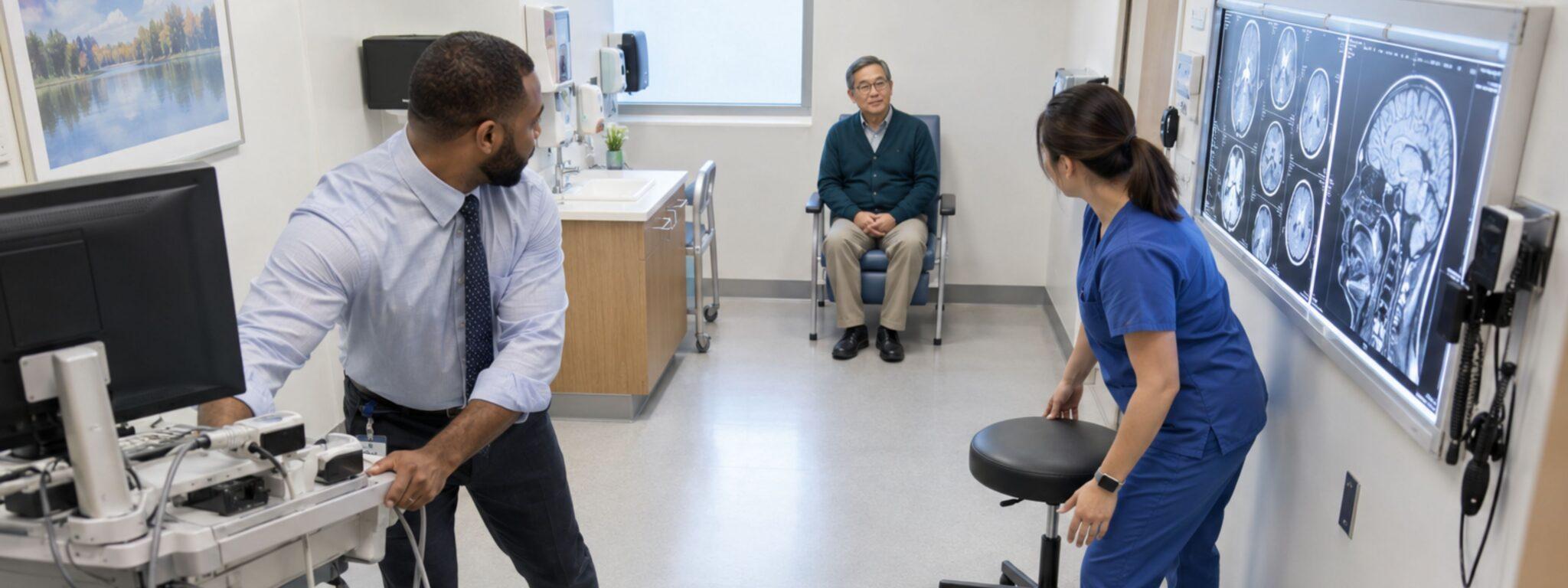
Before a medical provider even speaks, an interpreter’s first priority is setting up the physical environment. Visual clearings are essential. American Sign Language is an entirely visual language, meaning even small physical barriers can completely break the flow of communication.
- Positioning: Interpreters will almost always place themselves right next to or slightly behind the healthcare provider. This allows the Deaf patient to see both the provider’s facial expressions/body language and the interpreter’s signs in a single line of sight without having to constantly turn their head back and forth.
- Lighting and Shadows: Dimming the lights to show an X-ray or optical scan might make sense for the doctor, but it could effectively create a barrier for Deaf patients. Interpreters need adequate lighting to ensure signs and facial expressions, which carry key grammatical information, remain fully visible.This is especially true when a Deaf patient also has low vision, or other visual challenges. Sign language interpreters often request that lights remain on so that communication stays clear and visible..
- Physical Space: In tight quarters like exam rooms, emergency bays, or surgical prep areas, space is limited. Moving a rolling cart or adjusting a chair isn’t about personal comfort; it is about keeping the visual channel open.

Communication Mechanics: Talk directly to the patient
One of the most common hurdles in a clinical setting is helping hearing providers adjust how they converse through an interpreter.
- Maintain Eye Contact: It is natural for a doctor to look at the person who is speaking, but in an interpreted interaction, the provider should look directly at the Deaf patient. Eye contact builds the doctor-patient relationship, conveys empathy, and allows the provider to gauge the patient’s immediate reactions.
- Use First-Person Phrasing: Say “How long have you had this pain?” rather than telling the interpreter “Ask them how long they’ve had this pain.” Interpreters interpret in the first person; framing the conversation directly keeps the interaction natural and accurate.
- Pacing and Pauses: Medical jargon, complex treatment plans, and rapid-fire instructions require extra processing time to render accurately from English to ASL. Giving brief pauses allows the interpreter to convey everything cleanly and ensures the patient has time to process and respond.

Deaf Cultural Nuances in Healthcare
Understanding Deaf culture is critical for medical professionals to avoid misunderstandings and ensure quality care.
- Directness and Detail: Deaf culture places a high value on direct, detailed communication. When describing symptoms or pain, a Deaf patient might provide rich context or background details to ensure complete clarity. Conversely, vague medical explanations from a provider can lead to frustration or anxiety.
- Facial Expressions Are Grammar: In ASL, facial expressions are not just emotional displays; they are fundamental grammatical components that indicate intensity, sentence type, and nuance. A furrowed brow might indicate a grammatical question rather than confusion or distress.
- High-Context Communication: In many Deaf communities, information sharing is crucial. Patients may ask detailed questions about medications, procedures, and alternatives to feel fully informed. Taking the time to explain the why behind a medical decision builds trust.
When providers and interpreters work together seamlessly, the focus shifts entirely back to where it belongs: the patient’s health and well-being. By treating the ASL interpreter as a vital partner on the care team, providers create an environment where Deaf patients feel truly seen, heard, and respected, building profound trust and confidence throughout their medical journey. Ultimately, when communication flows without barriers, it leads to better clinical outcomes, higher patient satisfaction, and a far more rewarding experience for healthcare staff.
Supporting Your Language Access Strategy
We view language access as a partnership, not just a service. Implementing the CIFE framework is a collaborative step toward reducing friction in your clinical encounters. We work alongside your organization to ensure that care teams and interpreters share expectations, reducing the burden of communication mechanics so you can focus on patient care. From strengthening your language access program and providing healthcare interpreter training to investing in provider education, Linguava is dedicated to your team’s success. Connect with us today to learn how we can support your team in making your patient communication seamless.
Author
Leah Owens, one of Linguava’s Business Development Managers and an ASL interpreter for about 20 years, is sharing a few things you may not know about ASL and Deaf culture.